고분자 계면공학 연구실에서는 고분자의 화학 구조, 포뮬레이션, 모폴로지 설계를 기반으로 다양한 산업 분야에서 요구되는 기능성 소재를 연구합니다.
분자 수준의 화학 구조 설계부터 계면 및 모폴로지 제어까지 다양한 스케일의 접근법을 활용해 소재의 구조-계면-성능 간 상관관계를 연구합니다.
이를 바탕으로 전자기기용 접착 소재, 자동차 구조용 접착 소재, 그리고 기능성 고분자 소재 개발을 위한 기초 및 응용 연구를 수행하고 있습니다.
The Polymer Interface Engineering Laboratory (PIEL) develops functional polymer materials for a wide range of industrial applications through molecular design, formulation, and morphology engineering. We investigate structure–interface–property relationships across multiple length scales, from molecular-level structural design to interface and morphology control. Based on these fundamental understandings, our research focuses on the development of advanced adhesive materials for electronics, structural adhesives for automotive applications, and functional polymer systems for sustainable, energy, and environmental technologies.

Adhesives for Electronics
Molecular design and morphology engineering of pressure-sensitive adhesives
-
Optically clear adhesives (OCAs) and shock-absorbing adhesives for flexible displays
-
Thermally conductive adhesives for electronic packaging
-
Temporary bonding/debonding (TBDB) materials for semiconductor manufacturing
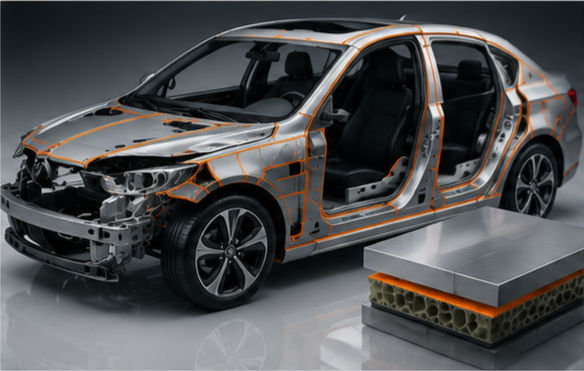
Structural Adhesives
High-performance adhesives for lightweight and sustainable structural bonding
-
Toughened epoxy structural adhesives with enhanced impact resistance
-
Multi-material bonding technologies for automotive applications
-
Epoxy foam adhesives for lightweight structural bonding

Functional Polymer Systems
Functional polymers for sustainable, energy, and environmental technologies
-
Debondable and degradable adhesives for sustainable materials
-
Ionogels with bicontinuous nanostructures for electrochemical applications
-
Mesoporous anion exchange resins for PFAS removal